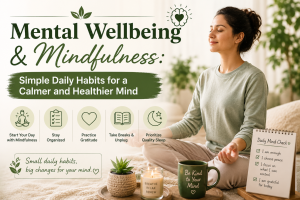
There was a phase when my phone felt like the gateway to everything — reminders, productivity, focus, even mindfulness. I downloaded meditation apps, tried guided sessions, followed streaks, and felt proud every time a notification told me I was “consistent.” But slowly, I noticed something strange. My mindfulness practice was starting to feel like another task I had to complete instead of a space to breathe. One morning, I forgot my phone while stepping outside for tea, and instead of panic, I felt quiet. That small moment changed how I understood mindfulness. It didn’t need apps, timers, or tracking. It needed attention. This article is about building a consistent mindfulness habit without apps — in a way that feels natural, human, and sustainable.
Why Mindfulness Doesn’t Need Technology to Work
Mindfulness is often misunderstood as something complex or modern, but at its core, it is incredibly simple: paying attention to the present moment with awareness. Long before smartphones, people practiced mindfulness through breathing, walking, observing nature, or simply sitting in silence.
The truth is:
- Your awareness is already available
- Your breath is always with you
- Your environment is always speaking
Apps can guide you, but they are not the source of mindfulness. They are just tools — and sometimes, tools become distractions.
The Hidden Problem With App-Based Mindfulness
While mindfulness apps can be helpful, they also introduce subtle limitations. Many people unknowingly shift from “being mindful” to “following instructions.”
Common issues include:
- Relying on reminders instead of internal awareness
- Feeling guilty when missing sessions
- Practicing only when a phone is available
- Turning mindfulness into a performance metric
Over time, mindfulness becomes externalized instead of internalized.
The goal of this guide is to bring it back home — to you.
Understanding Real Mindfulness: Awareness Over Structure
True mindfulness doesn’t require perfect posture, specific timing, or guided audio. It simply requires awareness.
You are practicing mindfulness when you:
- Notice your breath while waiting
- Pay attention to sounds around you
- Observe your thoughts without judgment
- Feel your body while walking
This means mindfulness is not an “activity slot” in your day — it is a way of being inside everyday life.
Starting Small: The 30-Second Awareness Practice
One of the easiest ways to build a consistent mindfulness habit is to start extremely small.
Try this 30-second practice:
- Pause wherever you are.
- Notice your breathing without changing it.
- Feel your feet or body contact with the ground.
- Observe one sound around you.
That’s it.
No app. No timer. No structure. Just awareness.
Small moments repeated daily create powerful habits.
Turning Everyday Moments Into Mindfulness Anchors
Instead of setting aside time for mindfulness, attach it to existing routines.
For example:
- While brushing teeth → notice sensations
- While drinking water → feel temperature and movement
- While walking → observe footsteps
- While waiting in line → notice surroundings
These are called “mindfulness anchors” — everyday triggers that remind you to return to awareness.
The Power of the First Morning Minute
The first minute after waking up is incredibly powerful. Your mind is still transitioning between sleep and activity, making it easier to observe thoughts without being consumed by them.
Try this:
- Sit up slowly
- Take three natural breaths
- Notice how your body feels
- Avoid immediately reaching for your phone
This simple practice sets the tone for the entire day.
Creating a “No-Phone Awareness Window”
Instead of relying on apps, create a short daily window where you simply observe life.
It could be:
- 5 minutes in the morning
- 5 minutes before bed
- A short evening walk
During this time:
- No screens
- No music
- No tasks
Just awareness.
Learning to Notice Without Judging
One of the biggest barriers to mindfulness is judgment. People often think:
“I’m doing this wrong”
“I can’t focus”
“I keep getting distracted”
But mindfulness is not about controlling thoughts — it is about noticing them.
A helpful shift:
Instead of “I am distracted,” say:
“I noticed distraction.”
This small change builds emotional distance and calm.
Using Breath as a Built-In Anchor
You don’t need an app to guide your breathing. Your breath is always available.
Try this simple method:
- Inhale naturally
- Exhale slightly longer
- Notice the rhythm
Whenever your mind feels busy, return to breath awareness.
It works anywhere:
- At work
- In traffic
- During conversations
- Before sleep
Walking as a Natural Mindfulness Practice
Walking is one of the easiest ways to practice mindfulness without effort.
During a walk:
- Feel your feet touching the ground
- Notice body movement
- Observe surroundings
- Let thoughts come and go
Even a 5-minute walk can reset your mental state.
The “Pause and Notice” Habit
Throughout the day, build a habit of pausing briefly.
Ask yourself:
- What am I feeling right now?
- What is my body doing?
- What sounds do I hear?
This micro-awareness breaks autopilot living.
Replacing App Reminders With Environmental Triggers
Instead of notifications, use your environment to remind you.
For example:
- Every time you drink water → pause and breathe
- Every time you open a door → notice your breath
- Every time you sit → feel your body settle
These natural cues are more sustainable than digital reminders.
Dealing With a Busy Mind Without Resistance
A common misconception is that mindfulness requires a quiet mind. In reality, a busy mind is completely normal.
Instead of fighting thoughts:
- Observe them
- Label them gently (“thinking,” “planning,” “worrying”)
- Return to awareness
This builds emotional resilience over time.
The Evening Reflection Without a Screen
Before sleep, instead of scrolling or using apps, try a simple reflection:
Ask yourself:
- What moments did I notice today?
- When did I feel most present?
- What felt overwhelming?
This helps close the day with awareness instead of stimulation.
Why Consistency Matters More Than Duration
Many people think mindfulness requires long sessions. But consistency matters far more.
Even:
- 30 seconds
- 1 minute
- 3 mindful breaths
Done daily, these moments reshape attention patterns over time.
Building Identity Around Awareness, Not Apps
The real shift happens when mindfulness becomes part of your identity, not your schedule.
Instead of:
“I use a mindfulness app”
It becomes:
“I notice my thoughts during the day.”
This identity shift makes the habit self-sustaining.
Real-Life Example: A Busy Workday Mindfulness Reset
Imagine a stressful workday:
Emails are piling up, messages are constant, and deadlines are tight.
Instead of opening an app, try:
- Pausing for 60 seconds
- Feeling your breath
- Relaxing shoulders
- Noticing surroundings
This simple reset can prevent overwhelm from building up.
Making Mindfulness Feel Natural, Not Forced
The biggest mistake is trying to “force calm.” Mindfulness is not about forcing anything — it is about noticing what already exists.
You don’t create calm.
You uncover it.
Conclusion
Building a consistent mindfulness habit without apps is about returning to simplicity. You don’t need digital tools to be aware — you only need moments of attention woven into daily life. By using breath awareness, walking, environmental triggers, small pauses, and non-judgmental observation, mindfulness becomes a natural part of your routine. Over time, it stops being something you “do” and becomes how you live. The most powerful mindfulness practice is the one you can access anytime — without screens, without reminders, and without pressure.
FAQs
1. Can I really practice mindfulness without apps?
Yes. Mindfulness is based on awareness, not technology. Apps are helpful but not necessary.
2. How long should I practice mindfulness each day?
Even a few minutes or short moments throughout the day are enough if done consistently.
3. What if my mind keeps wandering?
That is completely normal. Mindfulness is about noticing wandering, not stopping it.
4. When is the best time to practice mindfulness?
Anytime. Morning, during work breaks, walking, or before sleep all work well.
5. How long does it take to build a mindfulness habit?
With daily small practices, most people notice a shift within a few weeks.