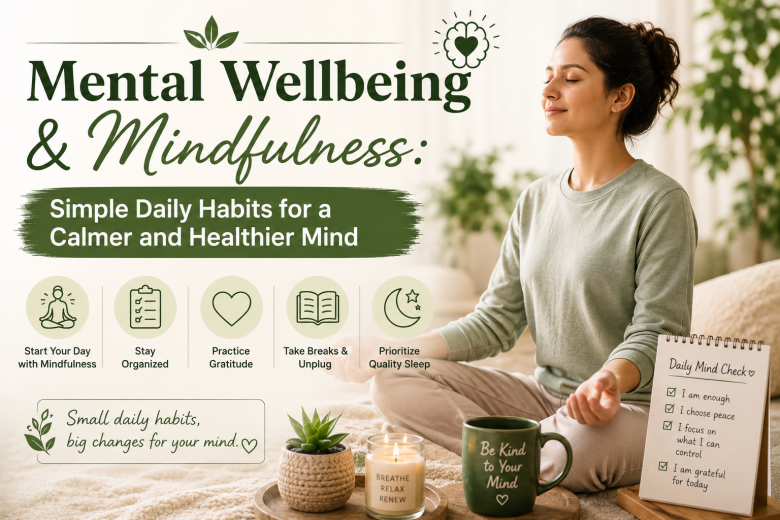
Mental wellbeing affects almost every part of life—your focus, energy, emotions, relationships, sleep, and even physical health. Yet many people ignore their mental state until stress, anxiety, or emotional exhaustion becomes difficult to manage.
Modern life often keeps the mind overloaded. Constant notifications, busy schedules, lack of rest, and mental pressure make it difficult to slow down and stay emotionally balanced. This is where mindfulness and healthy mental habits become important.
Mindfulness is not about completely clearing your mind or becoming perfectly calm all the time. It is about becoming more aware of your thoughts, emotions, and surroundings without constantly reacting to everything around you.
This guide explains practical ways to improve mental wellbeing and build mindfulness habits that fit naturally into everyday life.
Table of Contents
- What Mental Wellbeing Really Means
- Understanding Mindfulness
- Why Mental Wellbeing Matters
- Benefits of Mindfulness Practices
- Simple Daily Mindfulness Habits
- Stress Management Techniques
- Building Better Emotional Balance
- The Connection Between Sleep and Mental Health
- Digital Overload and Mental Fatigue
- Mental Wellbeing Comparison Table
- Common Mental Wellness Mistakes
- FAQ
- Conclusion
1. What Mental Wellbeing Really Means
Mental wellbeing refers to emotional, psychological, and social health.
It affects:
- How you think
- How you manage stress
- How you handle emotions
- How you interact with others
- How you make decisions
Mental wellbeing does not mean feeling happy every moment. It means being able to manage challenges in a healthy and balanced way.
2. Understanding Mindfulness
Mindfulness means paying attention to the present moment with awareness instead of operating on constant mental autopilot.
It involves:
- Awareness of thoughts
- Awareness of emotions
- Awareness of surroundings
- Non-judgmental observation
Mindfulness helps reduce mental clutter and improve emotional control.
3. Why Mental Wellbeing Matters
Mental health affects both mind and body.
Benefits of better mental wellbeing:
- Improved focus and concentration
- Better emotional control
- Reduced stress levels
- Healthier relationships
- Better sleep quality
- Improved daily productivity
A healthy mind supports a healthier lifestyle overall.
4. Benefits of Mindfulness Practices
Mindfulness is often simple, but its effects can be powerful over time.
Potential benefits:
| Mindfulness Habit | Possible Benefit |
|---|---|
| Deep breathing | Reduced stress |
| Meditation | Improved focus |
| Journaling | Emotional clarity |
| Mindful walking | Relaxation |
| Reduced screen time | Better mental calmness |
Small mindfulness habits can create noticeable changes gradually.
5. Simple Daily Mindfulness Habits
Mindfulness does not require complicated routines.
1. Deep Breathing
Slow breathing helps calm the nervous system.
Simple method:
- Inhale slowly
- Pause briefly
- Exhale slowly
Even a few minutes can help reduce tension.
2. Mindful Walking
Walking without constant phone use can help reset the mind.
Focus on:
- Breathing
- Body movement
- Surroundings
3. Journaling
Writing thoughts down can reduce mental overload.
Helpful topics:
- Gratitude
- Daily reflections
- Stress triggers
4. Mindful Eating
Eating slowly improves awareness and digestion.
Tips:
- Avoid screens during meals
- Focus on flavors and texture
- Eat at a calmer pace
5. Quiet Time Without Stimulation
Short breaks without social media or noise help the brain recover mentally.
6. Stress Management Techniques
Stress is unavoidable, but managing it matters.
Healthy stress-management habits:
- Exercise regularly
- Get enough sleep
- Take short breaks during work
- Spend time outdoors
- Talk with supportive people
Healthy coping habits reduce emotional exhaustion over time.
7. Building Better Emotional Balance
Emotional balance does not mean suppressing emotions.
It means:
- Recognizing emotions
- Responding calmly
- Avoiding impulsive reactions
- Understanding stress triggers
Helpful strategies:
- Pause before reacting
- Practice self-awareness
- Avoid constant negativity online
Emotional awareness improves relationships and decision-making.
8. The Connection Between Sleep and Mental Health
Poor sleep often increases stress, irritability, and mental fatigue.
Healthy sleep habits:
- Sleep consistently
- Reduce screen time before bed
- Avoid heavy late-night stimulation
- Keep sleeping environment comfortable
Rested minds handle stress more effectively.
9. Digital Overload and Mental Fatigue
Constant screen exposure affects attention and mental energy.
Common problems:
- Shortened attention span
- Mental exhaustion
- Information overload
- Increased stress
Better digital habits:
- Take screen breaks
- Limit unnecessary notifications
- Avoid doom-scrolling
- Create phone-free moments daily
Mental recovery requires periods of calm and focus.
10. Mental Wellbeing Comparison Table
| Habit | Main Benefit | Difficulty Level | Time Needed |
|---|---|---|---|
| Meditation | Focus and calmness | Moderate | 5–15 mins |
| Journaling | Emotional clarity | Easy | 10 mins |
| Walking | Stress reduction | Easy | 20–30 mins |
| Better Sleep | Mental recovery | Moderate | 7–9 hours |
| Reduced Screen Time | Lower mental fatigue | Moderate | Ongoing |
11. Common Mental Wellness Mistakes
1. Ignoring Stress Signals
Mental exhaustion often builds gradually.
2. Constant Multitasking
Too much mental switching reduces focus.
3. Overusing Social Media
Can increase comparison and anxiety.
4. Neglecting Sleep
Mental recovery depends heavily on rest.
5. Expecting Instant Results
Mindfulness benefits build slowly with consistency.
Simple Daily Mental Wellbeing Routine
| Time | Healthy Habit |
|---|---|
| Morning | Deep breathing and quiet start |
| Afternoon | Short movement break |
| Evening | Reduced screen exposure |
| Night | Reflection or journaling |
FAQ: Mental Wellbeing & Mindfulness
1. What is mindfulness in simple words?
Mindfulness means paying attention to the present moment calmly and consciously.
2. Can mindfulness reduce stress?
Mindfulness practices may help improve emotional awareness and relaxation.
3. How long should mindfulness practice last?
Even 5–10 minutes daily can be helpful.
4. Is meditation necessary for mindfulness?
No, mindfulness can also include walking, breathing, journaling, or mindful eating.
5. Why is mental wellbeing important?
It affects emotions, focus, relationships, sleep, and overall quality of life.
Conclusion
Mental wellbeing and mindfulness are not about becoming perfectly calm or eliminating stress completely. They are about learning healthier ways to manage thoughts, emotions, and daily pressure.
Small habits like deep breathing, better sleep, reduced screen time, and mindful awareness can gradually improve emotional balance and mental clarity. The most important thing is consistency, not perfection.
A calmer mind often leads to better decisions, healthier relationships, improved focus, and a more balanced life overall.